
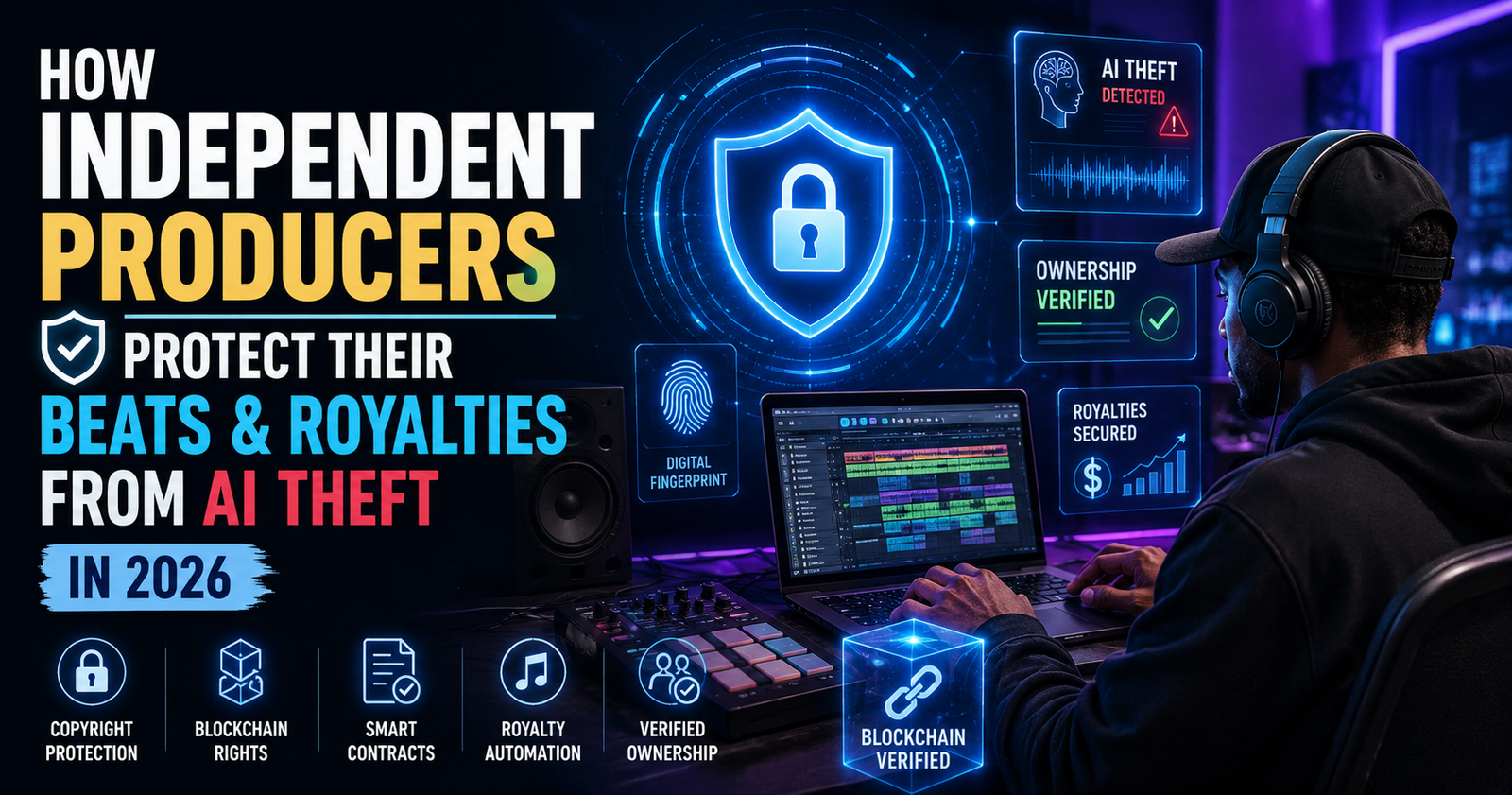
How Independent Producers Protect Their Beats and Royalties From AI Theft in 2026
A producer uploads a beat online.
Within days, an AI tool analyzes the rhythm, recreates the melody, changes a few layers, and generates a nearly identical version. Another creator uploads the copied track to streaming platforms, monetizes it, and begins collecting royalties before the original producer even notices.
This is no longer a futuristic scenario.
In 2026, independent producers are dealing with a completely new wave of copyright challenges driven by generative AI, automated remix tools, voice cloning software, and decentralized music distribution systems. Traditional copyright systems were built for a slower internet era. But AI can now replicate patterns, melodies, arrangements, and production styles within seconds.
For independent producers, the risk is no longer limited to someone directly stealing a beat file. The real problem is proving ownership, protecting royalty splits, and tracking how music is being reused across digital platforms.
This is why conversations around AI music theft have exploded across the music industry.
Producers are now combining traditional copyright systems with newer technologies like smart contracts, metadata verification, digital authentication, and blockchain music rights platforms to secure ownership and protect long-term income.
At the same time, independent artists are increasingly using platforms connected to a web3 music artist directory to publicly verify authorship, ownership history, collaborations, and royalty structures before tracks are released commercially.
The producers who survive in 2026 are not just creating better music.They are building stronger ownership systems around their music.
This guide explores how independent producers are protecting their beats, royalties, and creative identity from modern AI-driven threats while adapting to the future of digital music ownership.
Why AI Music Theft Is Becoming a Serious Problem in 2026
Artificial intelligence has transformed music production faster than most artists expected.
AI tools can now:
- recreate beat structures,
- imitate production styles,
- clone instrument patterns,
- generate similar melodies,
- automate remixes,
- and even reproduce vocal textures.
Many of these systems are trained on massive datasets collected from publicly available music online.
For producers, this creates a dangerous gray area.
A copied beat may not sound identical enough to trigger automated copyright systems, but it can still imitate the original producer’s creative identity closely enough to compete commercially.
This is one reason why searches related to AI music theft continue growing among producers, independent artists, labels, and music technology startups.
Unlike traditional piracy, AI-generated copying often becomes difficult to prove because:
- elements are modified algorithmically,
- arrangements are partially regenerated,
- melodies may be altered slightly,
- and ownership chains become harder to trace.
As a result, many producers are realizing that uploading music without proper ownership infrastructure is becoming increasingly risky.
The Biggest Threats Independent Producers Face Today
Modern producers are dealing with far more than simple file theft. The most common risks now include:
1. AI Recreation of Beat Patterns
AI music tools can analyze and replicate beat structures, melodies, and arrangement styles within seconds. This leads to cloned or highly similar instrumentals being generated automatically. It becomes difficult to prove originality when styles are replicated instead of direct copies. This is a growing concern under AI music theft for independent producers.
2. Royalty Misallocation
Many producers lose income due to incorrect metadata, missing splits, or outdated royalty systems. Payments often get delayed or assigned to the wrong contributors. Without proper tracking, revenue leaks go unnoticed for long periods. This makes music royalty protection essential for long-term earnings.
3. Unauthorized Uploads
Beats are often stolen or slightly modified and uploaded on streaming or social platforms. These copies spread quickly across multiple digital channels. Once distributed, it becomes difficult to trace the original source. This directly weakens copyright protection for creators.
4. Collaboration Disputes
Producers frequently collaborate with artists and engineers across different regions. Without proper agreements, disputes over splits and ownership often arise later. Missing documentation can lead to legal and financial conflicts. This is why clear contracts and records are critical for music royalty protection.
Why Traditional Copyright Alone Is No Longer Enough
Traditional copyright registration still matters in the music industry as it provides legal ownership documentation, court protection, licensing control, and enforcement rights. However, the modern digital music ecosystem is evolving much faster than traditional legal systems, creating a clear gap between protection and real-time usage.
A copyright registration can help during disputes, but it does not automatically handle real-time royalty tracking, collaboration verification, AI-generated copy detection, or instant ownership proof across multiple platforms. This limitation makes it difficult for independent producers to fully secure their work in today’s fast-moving digital environment.
Because of these challenges, producers are increasingly shifting toward modern solutions that offer faster and more transparent protection systems. These include advanced technologies that strengthen both ownership verification and revenue security.
Key Modern Solutions Producers Are Using:
- Metadata authentication for accurate ownership records
- Digital timestamps to verify creation time and originality
- Smart contracts for automated royalty distribution
- Blockchain music rights systems for transparent ownership tracking
In conclusion, traditional systems mainly protect legal ownership, while modern systems focus on operational protection and real-time enforcement. In 2026, independent producers need both approaches to fully safeguard their beats and royalties.
How Producers Protect Music Beats Using Blockchain Technology
One of the biggest shifts happening in modern music ownership is the rise of blockchain verification systems. Instead of relying only on centralized databases or traditional copyright paperwork, producers are now using decentralized ownership systems that create permanent and transparent digital records. These systems help independent creators secure their work more effectively in an industry increasingly affected by AI music theft and ownership disputes.
Blockchain technology stores important ownership information in a tamper-resistant format, making it much harder for records to be manipulated later. This gives producers stronger proof of authorship and improves transparency across collaborations and royalty systems.
Information Stored Through Blockchain Systems:
- Creator and producer details
- Creation timestamps
- Royalty percentage splits
- Licensing agreements
- Collaboration history
Many producers now use blockchain music rights platforms because they offer stronger protection compared to traditional ownership methods like screenshots, emails, or verbal agreements.
Benefits of Blockchain Music Rights Systems:
- Ownership records cannot be easily altered
- Timestamp verification proves originality and creation date
- Royalty distribution becomes more transparent
- Collaboration disputes are reduced significantly
- Ownership tracking becomes easier across digital platforms
For producers trying to protect music beats, blockchain systems create an additional layer of security and proof. For example, if a producer verifies a beat on a blockchain platform before releasing it commercially, the system creates a permanent public record showing:
- when the beat was created,
- who owns it,
- and how royalties are divided.
This becomes valuable evidence if ownership disputes or unauthorized usage issues happen later.
The Rise of Smart Contracts in Music Royalty Protection
Smart contracts are becoming one of the most important technologies helping independent producers secure their income in 2026. These blockchain-based agreements automatically distribute royalty payments whenever music generates revenue, removing the need for slow manual processing and reducing payment delays.
Traditional royalty systems often create problems such as inaccurate metadata, hidden deductions, delayed reporting, and lack of transparency between collaborators. This is why many producers are now turning toward smart contracts for stronger music royalty protection and more reliable payment systems.
By using blockchain music rights infrastructure, smart contracts can automatically track ownership percentages, verify royalty splits, and distribute payments in real time. For independent producers, this creates a faster, more transparent, and more secure way to manage royalties in the modern music industry.
Why Metadata Is Becoming Critical for Beat Copyright Protection
One of the biggest mistakes independent producers still make is ignoring metadata while releasing music online. Metadata is the hidden information attached to a music file that helps identify ownership, creator details, licensing rights, and royalty splits across digital platforms.
This information can include:
- producer and composer names
- copyright records
- timestamps
- licensing details
- royalty ownership percentages
- collaboration information
In 2026, copyright protection is no longer only about legally registering a song. Producers also need verified metadata attached directly to their digital music assets. Without accurate metadata, royalty payments can be delayed, ownership disputes become harder to resolve, and licensing opportunities may be lost completely.
Proper metadata management helps improve:
- royalty tracking accuracy
- ownership verification
- licensing transparency
- dispute resolution processes
Many modern music distribution platforms now prioritize verified metadata before approving releases. For independent producers trying to protect their work from AI music theft and royalty conflicts, metadata has become a critical part of long-term ownership protection.
How Independent Producers Are Building Proof of Ownership
Modern music ownership verification now goes far beyond traditional copyright registration. In 2026, independent producers are creating stronger proof systems that combine legal documentation with digital verification tools to better protect their work from AI music theft and unauthorized reuse.
Today’s producers often build layered ownership records using:
- blockchain timestamps
- digital ownership certificates
- collaboration agreements
- metadata records
- publishing documentation
- original project files
This layered approach creates a much stronger foundation for proving authorship and protecting creative rights. Many producers also maintain detailed archives of their production process, including DAW project history, export timestamps, version updates, collaborator communication, and licensing records.
If disputes happen later, these records become valuable evidence for verifying originality and ownership. The stronger and more transparent the ownership trail is, the easier it becomes for producers to defend their beats, royalties, and intellectual property.
The Role of Web3 Music Platforms in Producer Protection
Web3 music platforms are becoming increasingly important for independent producers because they focus on transparency, verified ownership, and creator control. Unlike traditional systems, decentralized music ecosystems allow artists to publicly document ownership records and royalty information in a more secure and transparent way.
Many creators now connect their music to a web3 music artist directory where important details such as artist profiles, blockchain certifications, royalty structures, release history, and verified ownership records are publicly visible. This helps reduce confusion around authorship and makes ownership verification much easier across digital platforms.
Public verification also builds stronger trust between:
- producers
- artists
- collaborators
- investors
- licensing partners
As Web3 music ecosystems continue growing, verified creator identities are expected to become a standard part of the independent music industry. For producers, this creates stronger credibility, improves ownership authority, and adds another layer of protection against AI music theft and royalty disputes.
Why Independent Producers Are Investing More in Beat Copyright Protection
The value of music ownership has increased significantly in 2026. Independent producers are no longer earning only through beat sales — they are building multiple income streams from their music across digital platforms and emerging technologies.
Today, producers monetize their work through:
- streaming royalties
- sync licensing deals
- NFT music releases
- gaming and metaverse integrations
- AI training permissions
- sample packs
- publishing rights
As music monetization expands, protecting ownership becomes far more important. This is why beat copyright protection is now viewed as a long-term business strategy instead of just a legal requirement.
Professional producers understand that unprotected beats create financial risks, royalty conflicts, and ownership disputes. Strong ownership systems, on the other hand, help creators secure revenue, maintain control over their work, and build scalable income opportunities in the evolving digital music industry.
How Producers Protect Music Beats Across Streaming Platforms
Streaming platforms have become one of the biggest income sources for independent producers, but they also create serious risks related to unauthorized uploads, royalty loss, and AI music theft. Since beats can now spread across multiple platforms within minutes, producers are adopting stronger protection methods to secure ownership and maintain control over their work.
Using Verified Music Distributors
Many producers rely on verified music distribution platforms to ensure accurate ownership registration and proper royalty tracking. Trusted distributors help reduce metadata errors and improve transparency across streaming services.
Registering Publishing and Metadata Correctly
Accurate publishing information and metadata play a major role in beat copyright protection. Producers now carefully register creator names, royalty splits, licensing details, and ownership records before releasing music publicly.
Audio Fingerprinting and AI Monitoring
Audio fingerprinting tools help track where beats are being used online. Many producers also use AI monitoring systems to detect unauthorized uploads, copied instrumentals, and modified versions of their work across digital platforms.
Securing Original Master Files
Some producers release preview versions publicly while keeping full-resolution master files stored securely until licensing agreements are finalized. This helps reduce direct copying and protects music beats before commercial distribution is fully secured.
AI Detection Tools Are Becoming Essential
In 2026, AI detection tools are becoming an important part of modern music protection systems. As AI-generated music continues growing, producers are using advanced technologies to identify copied patterns, cloned arrangements, and unauthorized recreations of their beats more effectively.
Modern AI detection systems can:
- analyze musical similarity patterns
- detect AI-generated recreations
- identify cloned arrangements and melodies
- compare generated outputs with original tracks
Although these technologies are still evolving, they are becoming increasingly useful in reducing the risks of AI music theft across digital platforms.
Many independent producers now combine multiple protection methods together, including:
- audio fingerprinting
- blockchain verification
- metadata tracking
- AI detection tools
This layered approach helps creators build stronger ownership systems and improve long-term protection for their beats, royalties, and creative rights.
The Financial Impact of Weak Music Royalty Protection
Many independent producers underestimate how much revenue is lost because of weak royalty management systems. Missing metadata, incorrect ownership splits, and unverified collaborations can quietly create long-term financial losses that often go unnoticed for years. Weak music royalty protection can lead to unpaid streaming revenue, publishing disputes, delayed licensing payments, and fragmented ownership records across platforms.
As the digital music industry becomes more complex, professional producers are beginning to treat royalty management as seriously as music production itself. In 2026, strong ownership infrastructure is no longer optional — it has become an essential part of building a sustainable and scalable creative business.
How Blockchain Music Rights Improve Transparency
One of the biggest reasons decentralized music systems are growing rapidly is transparency. Traditional ownership systems often rely on multiple disconnected databases, which can create reporting delays, ownership confusion, and royalty inconsistencies across platforms.
In contrast, blockchain music rights systems create transparent and verifiable ownership records that are accessible across decentralized ecosystems. This allows collaborators to verify royalty splits, artists to confirm ownership details, and producers to track licensing activity more efficiently.
By improving visibility and accuracy, blockchain-based systems help reduce disputes before they even begin and create a more reliable environment for independent music creators.
Building Long-Term Career Security as an Independent Producer
The producers succeeding in 2026 are thinking beyond short-term income from social media, beat sales, or streaming revenue. Instead of relying only on visibility and trends, they are building protected digital assets that create long-term ownership value and financial stability.
Modern producers understand that every beat is intellectual property, and the stronger the ownership system is, the more valuable that intellectual property becomes over time. This shift is pushing creators to focus not only on music production but also on ownership security and royalty management.
Long-Term Protection Strategies Producers Are Using:
- verified ownership systems
- royalty automation tools
- legal documentation
- decentralized verification
- transparent collaboration workflows
By combining creativity with strong ownership infrastructure, independent producers are building more sustainable careers in the evolving digital music industry.
The Future of Beat Ownership in the AI Era
AI will continue transforming the music industry, and independent producers will need to adapt faster to stay protected. While AI-generated content is evolving rapidly, the future of music ownership will not belong only to technology companies — it will belong to creators who build stronger ownership systems around their work.
Today’s producers now have access to advanced tools that were previously unavailable, including:
- blockchain verification
- smart contracts
- decentralized licensing systems
- digital authentication tools
- automated royalty management platforms
These technologies are reshaping how ownership, licensing, and royalty protection work across the modern music industry. As concerns around AI music theft continue growing, producers who combine creativity with secure ownership infrastructure will be far better protected than those still relying on outdated systems alone.
Final Thoughts
The music industry in 2026 is no longer only about creating great beats — it is also about protecting ownership, securing royalties, and controlling how music is used in an AI-driven world. As concerns around AI music theft continue growing, independent producers are turning toward stronger systems like beat copyright protection, smart contracts, metadata verification, and blockchain music rights platforms.
At the same time, platforms connected to a web3 music artist directory are helping artists verify ownership, improve transparency, and reduce collaboration disputes. The producers who succeed in the future will not just create better music — they will build smarter ownership systems around it.


0 Comments